Staples B2B
Adapting a retail experience for the complexity of enterprise UI
Client
Staples Portugal
Year
2021
Project type
B2B
Industry
B2C/B2B e-commerce
Tools
Figma, Zeplin, Slack, Loom
Who's Staples?
Staples is one of the world's most recognised office retail brands. But behind the consumer-facing store most people know, there's a separate, more complex world built entirely for businesses.
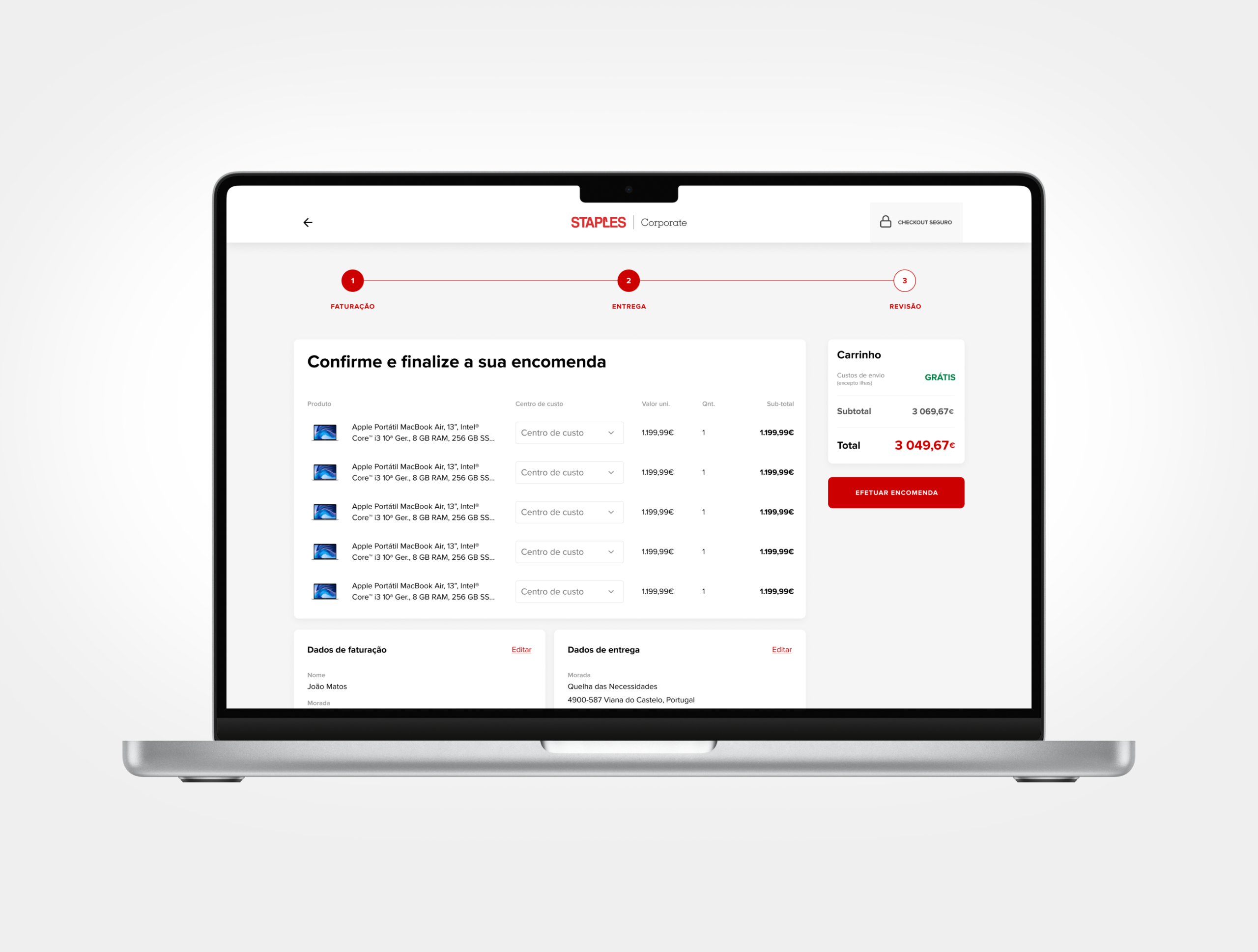
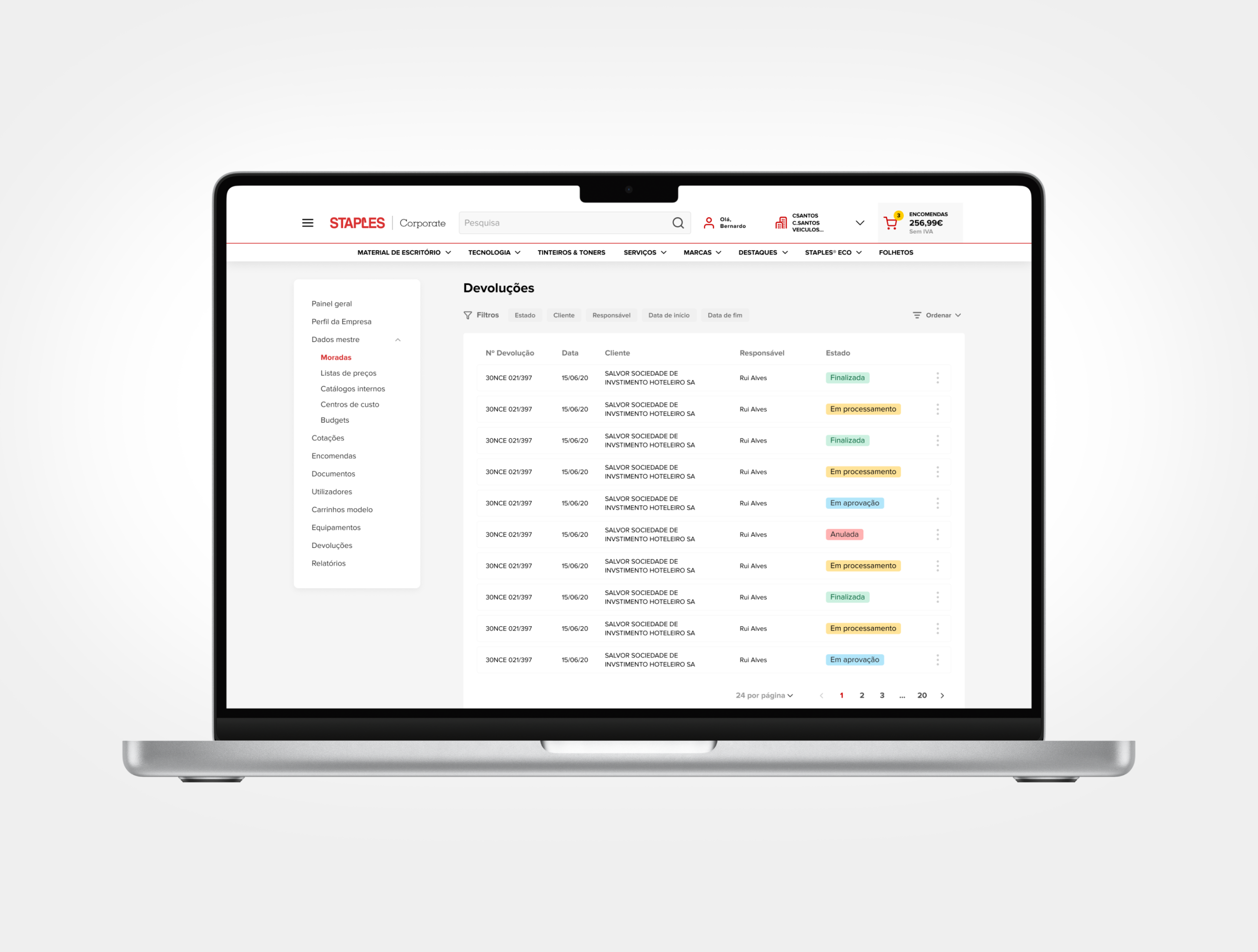
Staples B2B is a dedicated purchasing environment, not accessible to the general public, designed for companies buying at scale. Rather than a standard e-commerce experience, it gives businesses a tailored infrastructure: dedicated account managers, cost centre allocation, approval workflows, custom catalogues, scheduled purchasing, and full account visibility across teams and admins. It's less a store and more a procurement platform wearing a retail interface.
The challenge
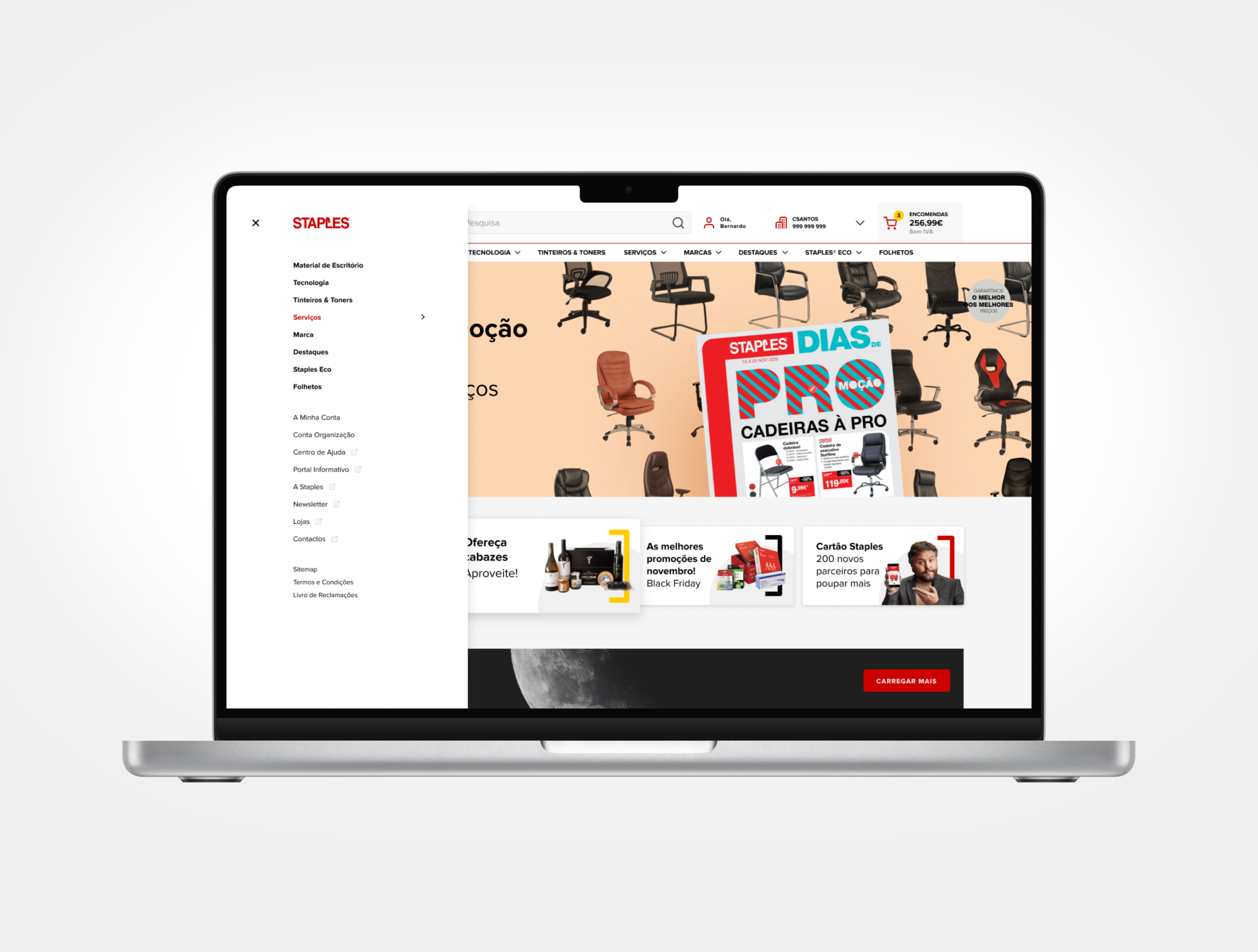
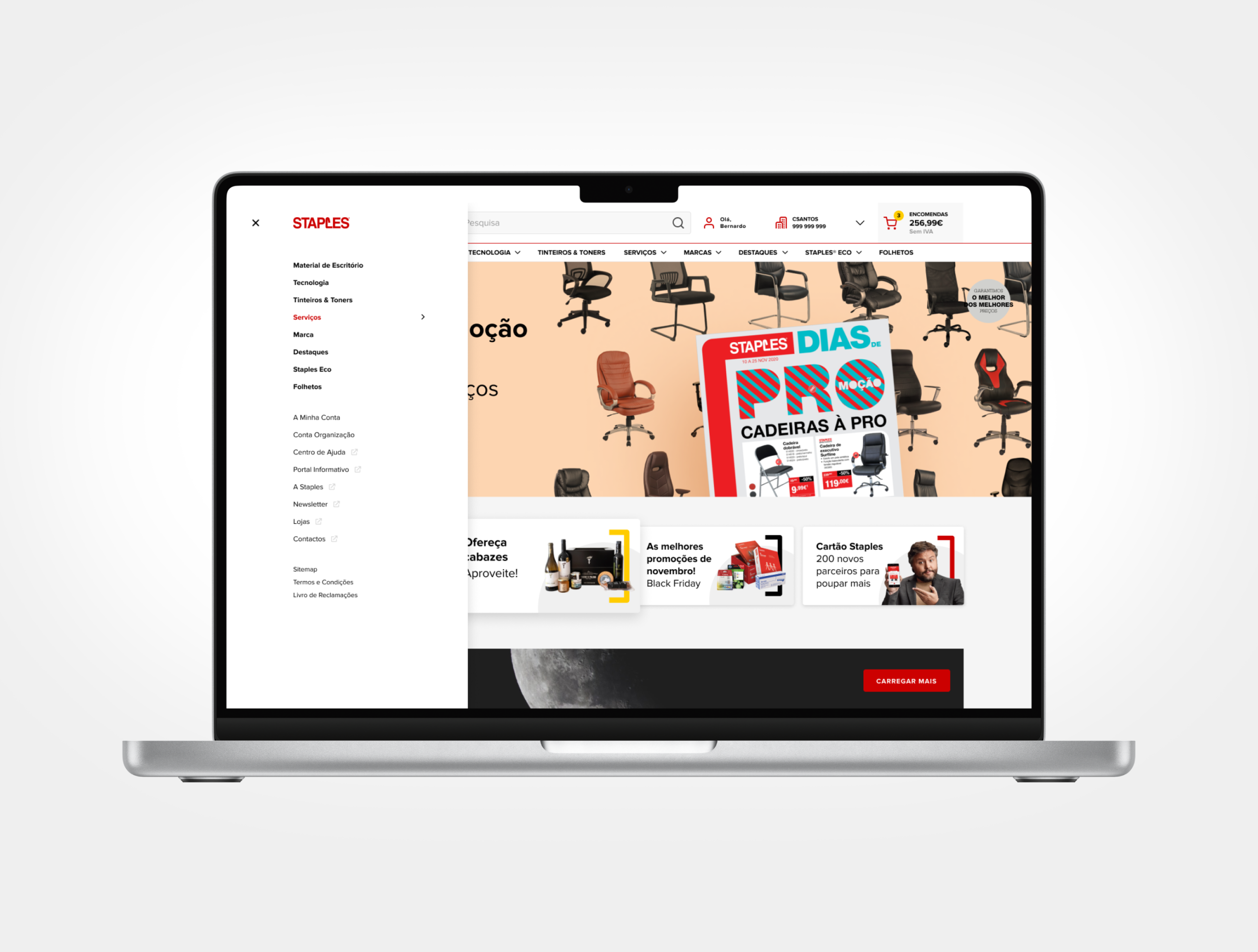
The B2B platform was built on the foundation of a B2C website I had previously designed as part of a wider team. The visual language was already established but enterprise purchasing is a fundamentally different experience from consumer browsing, and the interface needed to reflect that.
The challenge was twofold. First, extend and adapt an existing visual system to communicate professionalism and complexity without breaking consistency. Second, do it fast as the timeline was tight enough that any UI decision that would slow down engineering was off the table. Scope discipline wasn't optional. Every visual choice had to earn its place.
My role
I was the sole UI designer on this project, working in Figma across the entire surface area of the platform: in under one month.
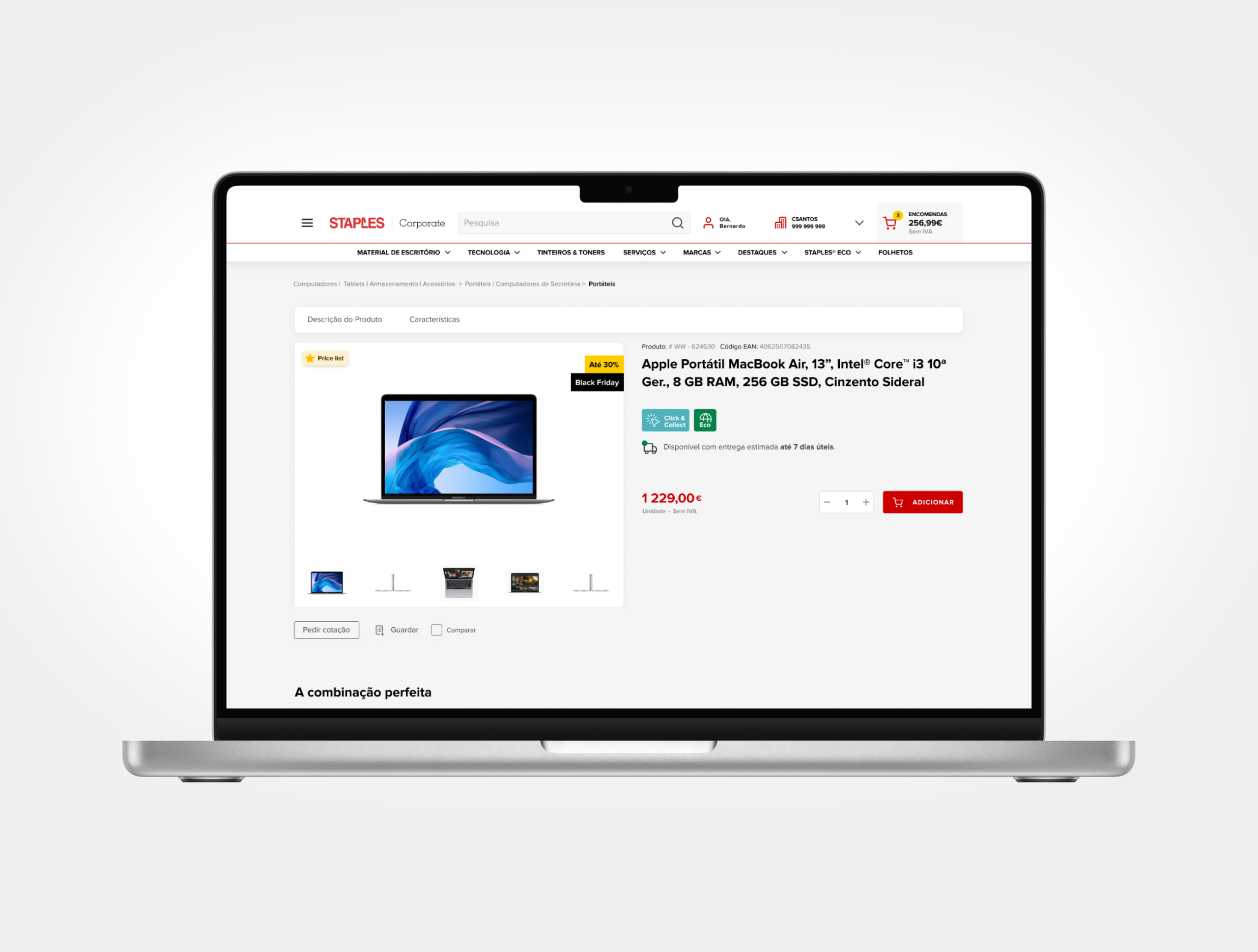
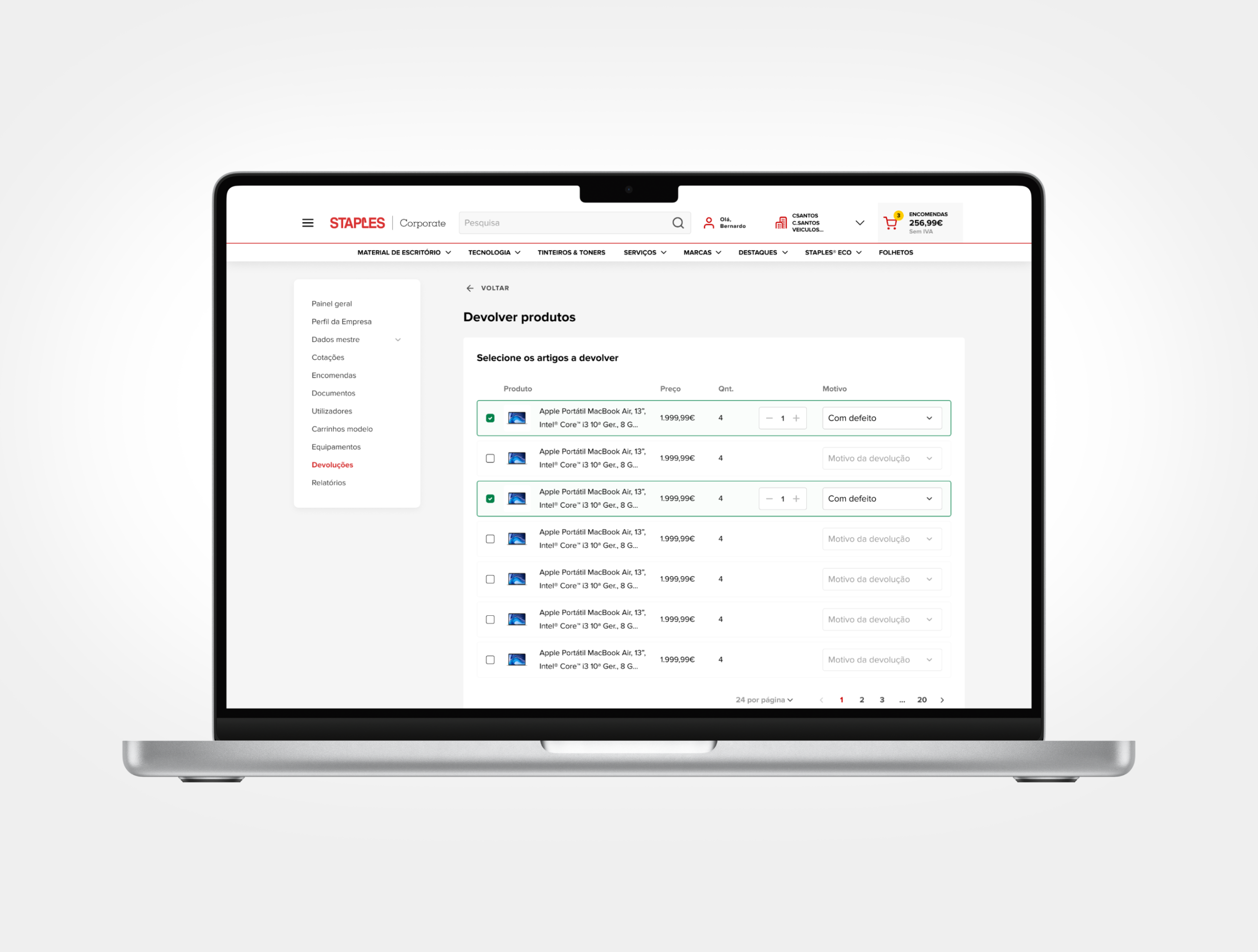
That surface area was significant. On the storefront side: product listing pages, product detail pages, cart and checkout flows. On the account management side: user and admin management, approval workflows, cost centre management, custom catalogue creation, order and returns management, quotes, documents, reports, company dashboard, delivery management, notifications, contacts and email templates.
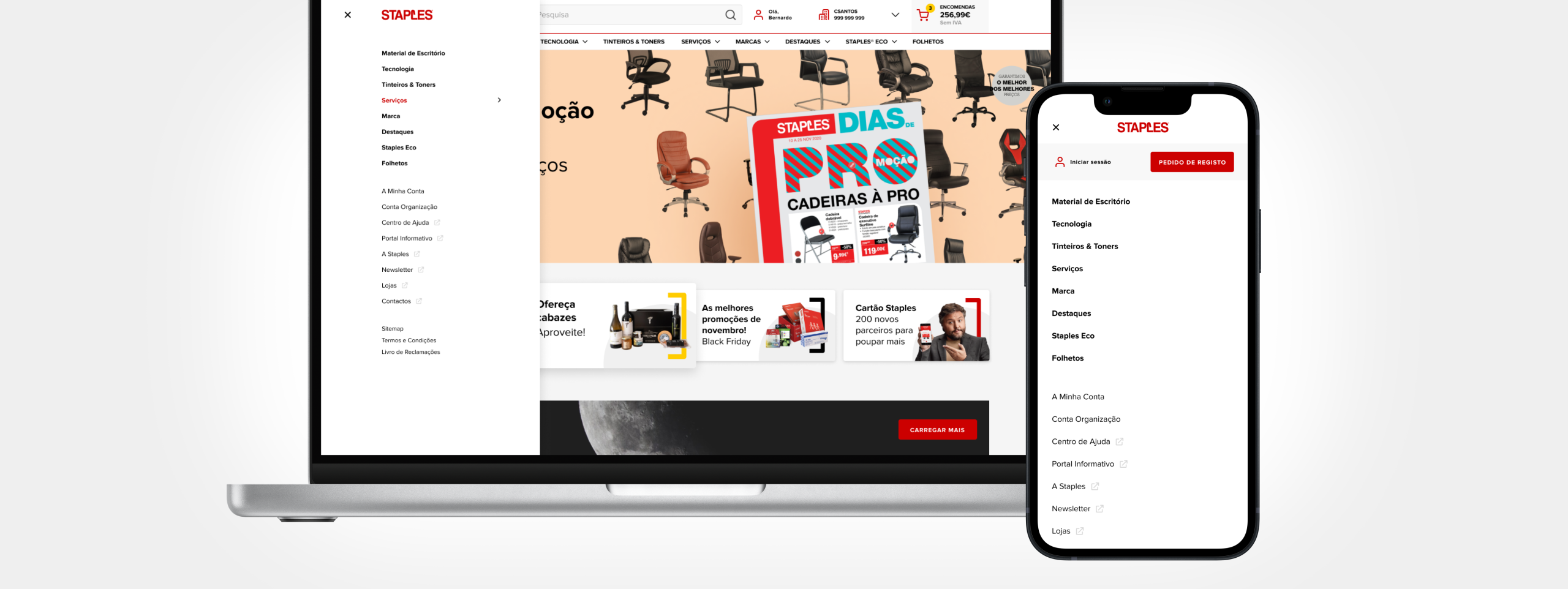
The work wasn't about reinventing the wheel it was about extending an existing system purposefully, making smart trade-offs under deadline pressure, and delivering a coherent experience across a platform with genuine enterprise complexity. Sometimes the most important design skill is knowing exactly what not to do.